JHNA Home Past Issues Volume 2: Issue 1-2
Volume 2: Issue 1 (2010)
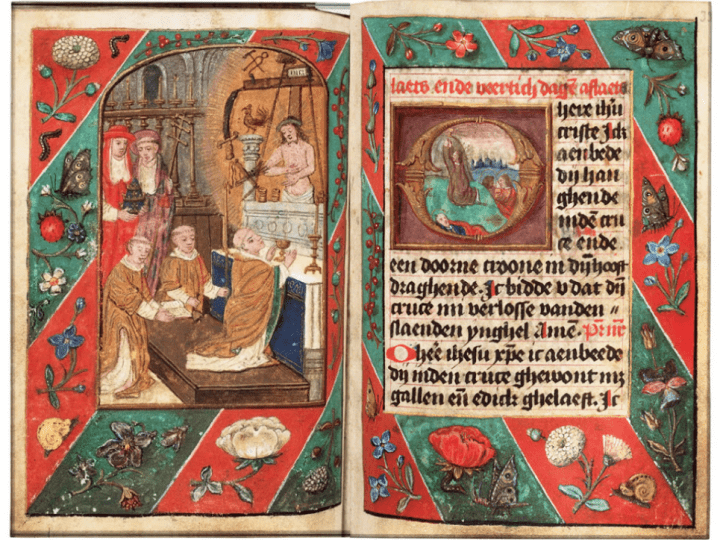
Dirty Books: Quantifying Patterns of Use in Medieval Manuscripts Using a Densitometer
Kathryn M. Rudy   

This article introduces a new forensic technique for the analysis of medieval manuscripts, namely, measuring the grime that medieval owners deposited in the margins in the course of reading.

 
The Art of Nikolaus Glockendon: Imitation and Originality in the Art of Renaissance Germany
Debra Taylor Cashion   

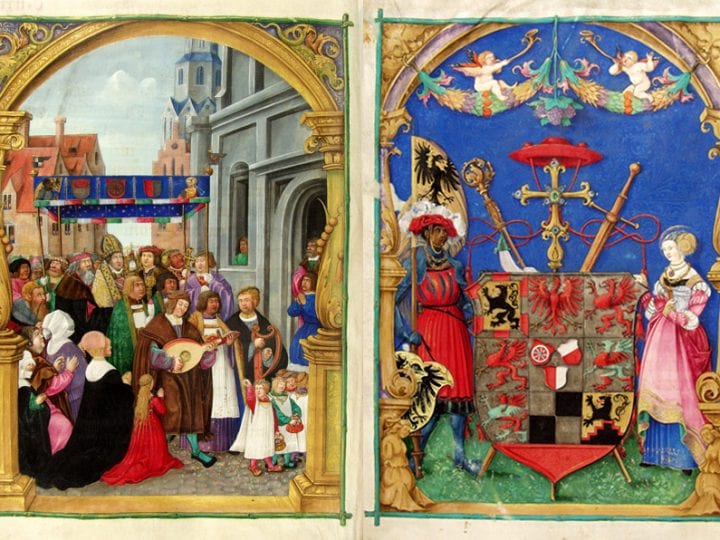
Nikolaus Glockendon, The Resurrection, Missale Hallense of Albrecht of Brandenburg, 1524, Aschaffenburg, Hofbibliothek, Ms. 10, fol. 153v (artwork in the public domain)


Nikolaus Glockendon was a sixteenth-century manuscript illuminator who created imitative versions of other artists' work, including the prints of his contemporary Albrecht Dürer.


The Whore, the Bawd, and the Artist: The Reality and Imagery of Seventeenth-Century Dutch Prostitution
Lotte C. van de Pol   

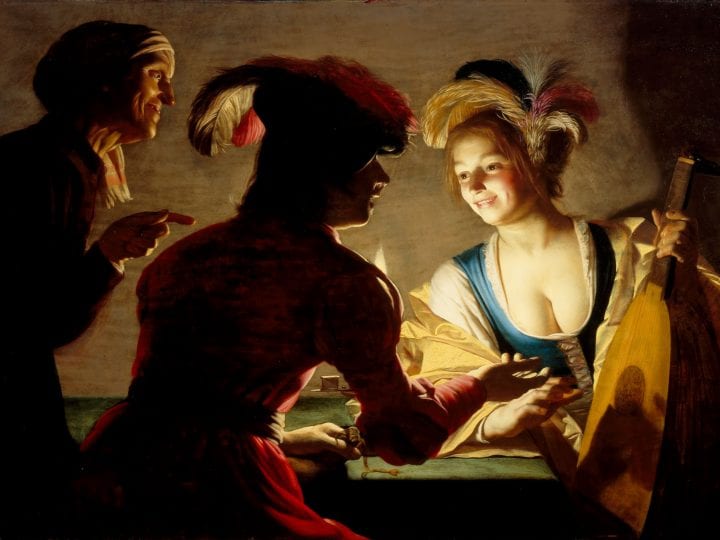
Gerrit van Honthorst, The Procuress, 1625, oil on panel, 71 x 104 cm. Centraal Museum, Utrecht, inv. no. 10786 (artwork in the public domain)


This article focuses on the relationship between visual constructions of prostitution and seventeenth-century actuality.

 
Gillis Coignet and the Amsterdam Lottery of 1592: Locating an Extraordinary Night Scene
Norbert Middelkoop   

Gillis I. Coignet (ca. 1542-1599), The Drawing of the Lottery of 1592 for the Amsterdam Madhouse (Dolhuis), 1593, oil on panel, 113 x 203.5 cm. Historisch Museum, Amsterdam, inv. no. SA 3019. Signed and dated at the bottom, left of center: ìG coingnet fe. / in mey 1593.î Image: Amsterdams Historisch Museum (artwork in the public domain)


An iconographical study of a rare night scene depicting a lottery (1592) by a Flemish painter working in Amsterdam.